How Fiber Helps You Lose Weight on the HCG Diet?

Fiber is an essential part of a diet when you’re trying to lose weight. Understanding its effect on the body can make HCG injections more effective at reducing weight and inches from your body. It’s very common to hear people say you should include foods rich in fiber into your diet, especially if you’re trying to lose weight. The sad thing about this is you don’t take it seriously. Have you taken it seriously, you wouldn’t have to be where you are right now, overweight. But why is fiber so important in the HCG diet?

Types of fiber and required daily fiber intake

There are actually two types of fiber:

  • Soluble– Soluble fiber absorbs water to form a gel-like substance. This helps slow down how fast your stomach releases foods into the gut. Soluble fiber helps regulate blood sugar level and lower cholesterol levels. A fiber intake of 30 grams can help you lose weight, lower blood pressure, and improve insulin sensitivity. You can also lose belly fat and prevent belly fat gain by eating more soluble fiber. Sources of soluble fiber include oats, rice bran, dried beans, citrus fruits, potatoes, and peas.
  • Insoluble– Insoluble fiber can, like soluble fiber, help control weight by preventing hunger pangs. Adding more insoluble fiber to your diet can help you get your bowels moving if you become constipated. It’s also beneficial if you have bowel-related health problems like hemorrhoids and constipation. Foods that are high in insoluble fiber include vegetables like cauliflower and green beans. Other sources of insoluble fiber include nuts, wheat bran, and whole-wheat flour.

Fiber-rich foods have a low-calorie count. The daily fiber intake requirement for women of 50 and below is 25 grams. The daily fiber requirement for women over 51 is 21 grams.  Men, on the other hand, are supposed to have more fiber intake as they are required to take 38 grams of fiber per day for those 50 and younger. Those 51 and up are only supposed to take 30 grams per day.

The role of fiber in weight loss

Weight loss is an internal process. You will first start to lose hard fat in your internal organs like the digestive system, liver, and kidney. After that, you will start to lose soft fat around your waistline and thigh. Inside your digestive system, fiber normalizes our body’s bowel movements. This decreases the chances of constipation. It also prevents the development of colorectal cancer, which is an abnormal growth of cells that may spread elsewhere in the body.

Fiber is super-filling, and it works best when it can absorb water. Your body digests fiber slowly than simple sugars and starches. You can lose significant weight simply by getting 30 grams of fiber each day, without any other dietary changes. The benefits of fiber go far beyond keeping your appetite under control and keeping your weight under control. It’s good for your gut and encourages gut bacteria diversity. Fiber is heart-healthy and promotes regular bowel movements. It can reduce your risk of diabetes and certain chronic diseases.

Common Mistakes During the Maintenance Phase of the HCG Diet

Weight loss results are important to everyone who wants to lose weight, but healthy weight loss requires you to measure your results over time and remain motivated no matter what diet protocol you follow.

Like any other diet plan, the HCG diet is not immune to failure. Although the protocol is quite precise as it is designed for weight loss and metabolism reset, it is so easy to get off course and gain weight if you make the following mistakes. 

Mistake #1: Doing excessive exercise 

As you transition into the maintenance phase and ramp up your calorie intake, you can gradually increase the intensity of your workout but not to the point of muscle soreness. Your body will react by producing lactic acid and to neutralize the acidity, your body will respond by retaining water. Start low and monitor your weight every morning to see how exercise is affecting your weight. If your weight fluctuates more than 2.1 pounds or less than 2.1 pounds, you need to reduce your exercise routine until your weight can stabilize.

Mistake #2: Overeating or eating too little

The recommended calorie intake while on the Maintenance phase is 1500 calories a day. When you consume too many calories, you will gain weight because your body believes that it should store excess energy to use later. If you consume too few calories, your body may go into survival mode and try to hold on to what you give it. Moreover, your body won’t know how to handle foods if you never try them.

Mistake #3: Not tracking your daily food intake 

Keep track of the foods you eat even if you are no longer in the very low-calorie phase. You can do this by writing it down in your journal or by using an app. Tracking your foods can help you pinpoint foods that trigger weight gain. Among the most common trigger foods includes fried foods, peanut butter cheese, and many more.

eating sweets

 Mistake #4: Having sugar and starches during the first three weeks

Some dieters unknowingly add starches and sugars into their diet by:

  • Using seasoning and spices with hidden sugars and starches
  • Taking vitamin supplement coated with sugar
  • Eating process foods
  • Using canned fruits and veggies

Foods with hidden sugar can cause weight gain and provide empty calories.

Mistake #5: Adding too many cautionary foods at once 

Your body needs some time to adjust from the very low-calorie intake and from the limited food options. So, do not add more than one new food at a time to give your body some time to adjust and learn how to deal with new foods.

Once you reach phase 3, you need to continue choosing carefully when it comes to fruits and veggies, as not all of them are healthy for you. Fruits and vegetables that contain a lot of starch and sugar, such as bananas, melons, grapes, corn, potatoes, and peas, should be avoided. After the first week, slowly add some starch and sugar back in. Before diving into table sugars, pasta, and bread, start with those that have natural sugar and carbs.

Adding Superfoods to Your HCG Diet: A Guide to Healthy Foods in Phase 3

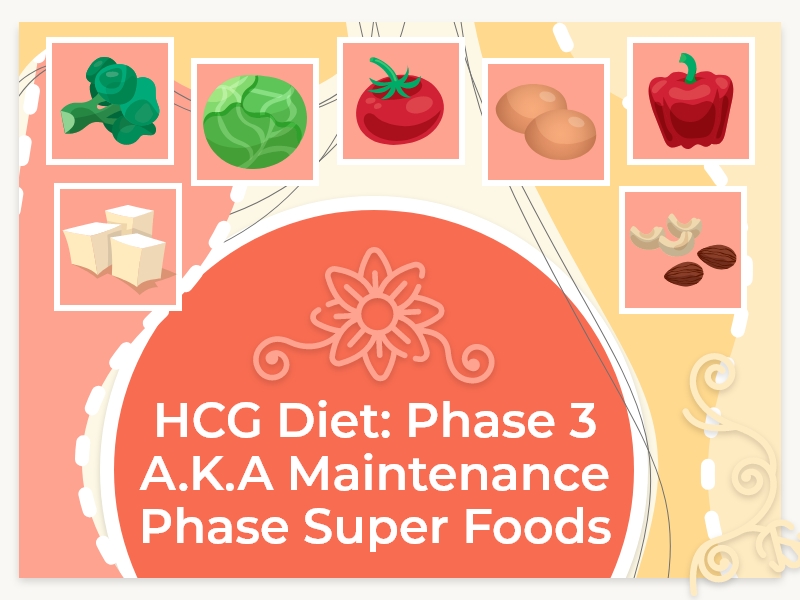
Phase 3 of the HCG Diet allows you gradually add healthy foods back into your diet while still maintaining your weight loss. To make the most out from this phase, it’s essential to incorporate nutrient-rich foods that promote general health and support healthy weight loss. These foods are commonly referred to as superfoods because they typically contain antioxidants, vitamins, and minerals that offer incredible health benefits.

Superfoods on Phase 3 of the HCG Diet

Here are some of the best superfoods to add during phase 3 of the HCG diet::

  • Low-carb veggies

As you transition from restricting your calorie intake into the stabilization phase, you slowly incorporate carbohydrates back. However, the type of carb you choose matters because not all carbohydrates are created equal. To help stabilize your weight, choose clean carbohydrates. Clean carbs are unprocessed and are non-starchy. They contain natural fiber that helps reduce chronic inflammation. Examples of non-starchy, clean-carbs are vegetables like:

  • Asparagus
  • Broccoli
  • Cauliflower
  • Cabbage
  • Celery
  • Cucumber
  • Garlic
  • Green beans
  • Eggplants
  • Kale
  • Spinach
  • Peppers
  • Lettuce
  • Tomatoes
  • Onion
  • Mushrooms
  • Winter or summer squash

Protein-rich foods

Protein-rich foods are essential to help you maintain your muscle and to keep you feeling fuller longer. Super protein-rich foods include:

  • Eggs
  • Tofu
  • Almonds
  • Walnuts
  • Macadamia nuts
  • Pistachio nuts
  • Flax seeds
  • Pumpkin seeds
  • Pecan

Low-carb fruits

Just like veggies, some fruits are high in carbs and natural sugar. Low-carb fruits can help protect against chronic diseases such as diabetes and cancer. Examples of low-carb fruits you can have during phase 3 include:

  • Apples
  • Berries (Blueberries, strawberries, cranberries)
  • Grapefruits
  • Pears
  • Peaches

Dairy products

Dairy products like plain Greek yogurt, Swiss cheese, almond milk (unsweetened), and coconut milk are incredibly healthy. They have more calcium, vitamin D, and have unique properties that may help control your appetite. A word of caution- introduce them gradually back into your diet. Do not use too much of them on the same day and watch out for your portion.

Fats and oil

You are not allowed to have them during the weight loss phase, but not during this phase. Healthy fats and oil include:

  • Avocado oil
  • Almond oil
  • Coconut oil
  • Flaxseed oil
  • Salmon
  • Black olives
  • Almond butter
  • Cocoa butter
  • Olive oil
  • Unsalted butter

How to add superfoods into the HCG diet

Adding superfoods can be a great way to maintain weight loss while promoting overall health. 

  1. Start by choosing clean carbohydrates, such as non-starchy vegetables like asparagus, broccoli, and kale. Protein-rich foods like eggs, nuts, and seeds can help maintain muscle and promote feelings of fullness.
  2. To make it easy to add superfoods to your diet, try incorporating them into snacks or desserts, substituting beans for meat in some dishes, and taking dietary supplements.
  3. Eat superfoods for your dessert or snacks. Instead of eating your usual dessert, just like the one before you started out doing the HCG diet, have low-carb fruits or healthy nuts for your snacks or dessert.
  4. Substitute beans for meat once in a while. Tofu, legumes, and amaranth are extremely rich in protein and you can use them for your main dish.
  5. Take dietary supplements. Superfoods are available in supplement forms, and they’re packed with various nutrients like vitamins, minerals, and omega-3 fatty acids.

HCG Diet: When and How to Stop Early

The HCG diet is most effective when you follow the protocols properly. You load for two days followed by at least 21 days of restricted calorie intake with the administration of HCG injection. You can also lengthen your time restricting your calorie intake just as long as it shouldn’t be shorter than 23 days. 23 days is the minimum required number of days on the protocol or else you may not be able to stabilize your weight.

However, there are times when you need to stop the HCG diet protocol earlier than expected due to:

  • Injuries
  • No HCG available or your kit hasn’t arrived on time
  • Pregnancy
  • Some other unexpected interruptions that could sabotage your weight loss result.

You may find that you have to cut your round short before you even have the chance to complete the 23 doses of HCG injections. In the event that you cannot complete the 23 doses, there are some steps that you can take to avoid regaining weight rapidly. However, there is no guarantee you’ll keep all the progress you’ve made.

How to stop the protocol early

Step 1: Let your doctor know. If you’ve consulted to one. Your doctor will instruct you on how to wean off the HCG injection.

Step 2: If you haven’t consulted with an HCG diet doctor, the most that you can do is to transition into the maintenance phase as if you have finished your round. OR continue eating a low-calorie diet just like when you are doing the HCG diet but without the HCG injection. Make sure you avoid eating anything with fats or oil for the first 72 hours as there can still be HCG running in your system.

Step 3: Avoid any form of starches and sugar for the next three weeks. Restricting your carbohydrate and sugar intake may help you avoid unwanted weight gain because weight gain is very common after you restrict your calorie intake. Focus on eating whole foods. You can incorporate good fats like olive oil, avocado oil, and coconut during these three weeks as this can help you feel fuller longer. After three weeks, you can slowly add healthy carbohydrates and whole grains like whole-wheat bread, pasta back into your diet.

Step 4: During the three weeks, gradually increase your portion sizes. It’s not necessary to count any grams of foods anymore, but for weight control, it’s important to remember portion sizes.

  • Grains: ½ cup (80 grams of cooked pasta, rice)
  • Vegetables: 1 cup (1 cup of vegetables is equivalent to 2 cups of leafy greens and 1 cup of raw vegetables)
  • Fruits: 1 cup, one-quarter cup of dried fruits or nut (35 grams)
  • Protein: 3 ounces of lean meat, seafood, or poultry, 1 egg or 2 egg whites, ½ ounce of unsalted nuts, 1 tablespoon of peanut butter
  • Dairy products: 1 cup (equivalent to 1 cup of milk or yogurt, 2 ounces of processed cheese, or 1 ½ ounce of natural cheese like cheddar

Step 5: Exercise. Take a 10-minute walk each day and work your way up to 30 minutes per day. You may want to include strength training two to three times per week to increase lean muscle mass and to burn more calories.

Maximizing Weight Loss on the HCG Diet

The HCG diet is truly an amazing wonder diet, and it deserved to be dubbed as such. The reason is very simple-it’s possible to lose weight without having to starve or exercise vigorously for days. With the HCG diet, you can lose an average of 1 to 2 pounds per day.

Weight loss is not consistent

Weight loss on the HCG diet is not consistent. Some days you will lose more and some days you will lose less. Sometimes, you may not lose at all, and sometimes you may even gain. The weight you’ll lose will range anywhere from 15 to 60 pounds in 30 days.

The amount of weight you will lose depends not only on how properly you follow the plan, but it’s important to understand how many calories each day your body uses to function normally. In other words, if your body requires more calories to function normally, then it will use more of your excess fat. On average, men can burn 2500 to 4500 calories in a day, while women burn 1500 to 2000 calories in a day. About 500 calories will come from the foods you eat and the rest will come from the stored adipose tissue.

It is also best to fully understand how this plan works so that you can get the best results possible. This diet comprises a combination of a low-calorie diet and the administration of HCG hormone. The diet is divided into three phases. Phase 2 is the longest and also brings about the maximum weight loss. This is the phase where you will restrict your calorie intake accompanied by the daily administration of HCG injection.

Tips to maximize your weight loss result

In most cases, the plan provides an amazing overall result, but you can always do your part to maximize your weight loss result. Below are 5 tips to maximize your weight loss result while on the HCG diet.

  1. Stick to the HCG diet meal but never combine two foods from the same category in the same meal. This means you shouldn’t eat your orange and apples at lunch and your celery and cabbage at dinner. Do not eat tomatoes and asparagus more than every 3 to 4 days and never eat them on the same day.
  2. Never skip your protein or vegetable options, but you can leave out the carbs. Remember that protein is the single most important nutrient for weight loss no matter what diet plans you follow. Protein increases metabolism, reduces appetite and helps your body burn fat. Vegetables are weight loss friendly. They are full of nutrients that may help improve metabolism and subsequently burn fat.
  3. Make exercise a habit. Exercise keeps you fit and helps you shed weight faster. Besides maximizing weight loss, it also keeps you healthy. Walking for at least 30 minutes a day is ideal to get the best benefits.
  4. Drink 1 to 2 cups of green tea every day. Green tea helps boost metabolism and promotes weight loss in addition to having your daily shot of HCG.
  5. Take 2 tablespoons of apple cider vinegar twice a day. Apple cider vinegar may help you lose weight by reducing insulin levels, promoting satiety, and lowering blood sugar levels.

ADDRESS

26 Pacific Grove. United state (US) California 93950

Call Us (Tolls Free)

877-334-8709

EMAIL US HERE

support@www.hcg-injections.com

We offer everything you need to start, along with ongoing support for HCG Kits users, including tips, advice, and resources for a fitter, slimmer you!

Important Note:

Not everybody will react to in the same way to hCG (Human Chorionic Gonaditropin) – in other words what is true for one person might not work for another- as such do not get discourage if you don’t see the same pronounced results as in others on the same hCG diet – all the information provided here is based on people’s testimony and documentation gather from reputable sources online – the before and after pictures are submitted from our most successful customers and they were offered 20% discount incentive to show the very positive results – not everyone will achieve this – This being said the hCG diet works well , give it a try and see for yourself.

Our Payment Partners :

Add to cart