All You Need To Know About HCG Pregnancy Test

The main use of a pregnancy test is to evaluate if you are pregnant. Both urine and blood tests for HCG can be used for this purpose, and repeat testing may be done to confirm a pregnancy. Very early in a pregnancy, tests that measure the amount of HCG may also help assess the age of a fetus.

What Is The HCG Pregnancy Test?

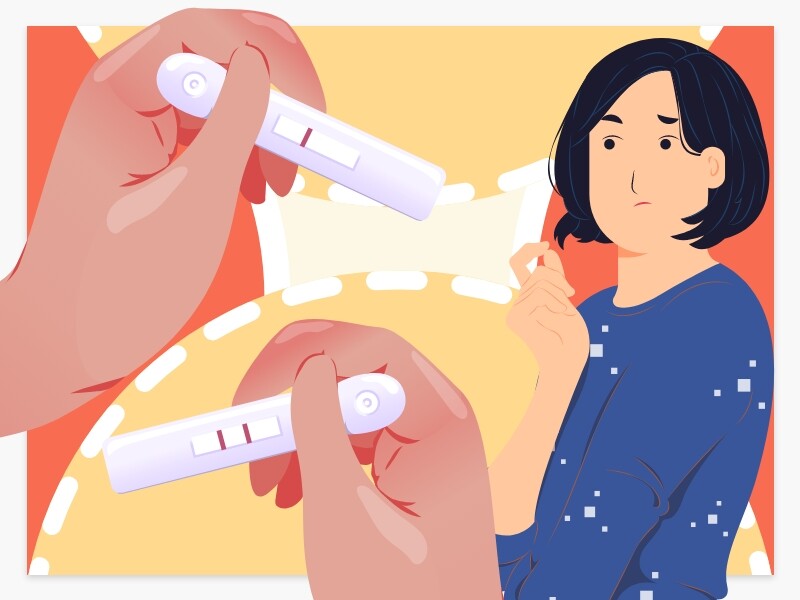
A pregnancy test is a way to determine if you’re pregnant. If your pregnancy test is positive, it means you’re pregnant. If the test is negative, it means you aren’t pregnant. Pregnancy tests work by detecting human chorionic gonadotropin (HCG), a hormone your body makes when you’re pregnant.

From the very beginning of pregnancy, your body starts to go through changes to support the cells that will develop into your baby. One thing that happens very quickly is the production of HCG. If you’re pregnant, your body starts to produce more HCG. Your HCG levels start to build up once the fertilized egg implants in your uterus about six to 10 days after conception.

Types of HCG Tests
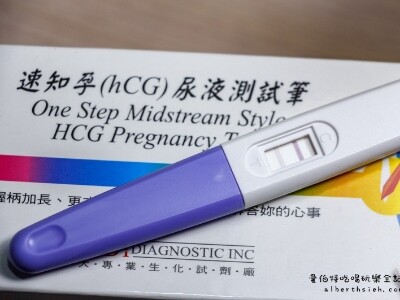
HCG Tests

There are two main types of pregnancy tests — urine tests and blood tests. Often, you’ll take a urine test at home with a home pregnancy test. This type of test is available over the counter and in a variety of price ranges. Blood tests to check for pregnancy happen in your healthcare provider’s office and involve giving a sample of your blood. The other way to confirm a pregnancy is by using an ultrasound. Your provider performs an ultrasound in their office.

There are several reasons why you might take a pregnancy test. You could be trying to get pregnant and hoping for a positive result. You might have experienced an issue with your birth control. You might even be about to have a medical procedure or start a new medication that could be complicated by pregnancy. No matter what the reason, if you ever have any questions about your test results, the best thing to do is to reach out to your healthcare provider.

Knowing HCG Levels in Pregnancy and the Results

In pregnancy, HCG level rises rapidly during the first trimester and then declines slightly. The expected HCG ranges in pregnant women are based on the length of the pregnancy.

  • 3 weeks: 5 – 72 mIU/mL
  • 4 weeks: 10 -708 mIU/mL
  • 5 weeks: 217 – 8,245 mIU/mL
  • 6 weeks: 152 – 32,177 mIU/mL
  • 7 weeks: 4,059 – 153,767 mIU/mL
  • 8 weeks: 31,366 – 149,094 mIU/mL
  • 9 weeks: 59,109 – 135,901 mIU/mL
  • 10 weeks: 44,186 – 170,409 mIU/mL
  • 12 weeks: 27,107 – 201,165 mIU/mL
  • 14 weeks: 24,302 – 93,646 mIU/mL
  • 15 weeks: 12,540 – 69,747 mIU/mL
  • 16 weeks: 8,904 – 55,332 mIU/mL
  • 17 weeks: 8,240 – 51,793 mIU/mL
  • 18 weeks: 9,649 – 55,271 mIU/mL

Normal value ranges may vary slightly among different laboratories. Talk to your provider about the meaning of your specific test result.

Other Results Found In the Test

pregnant woman

Most pregnancy tests simply measure whether or not you have HCG in your sample. But certain pregnancy tests also measure how much HCG you have. These tests are called quantitative HCG tests, and they’re usually done on blood samples.

The amount of HCG in your body can give your provider important information about your pregnancy and the health of your unborn baby. Quantitative HCG tests are sometimes used to help:

  • Find out the age of the fetus if you’re very early in your pregnancy
  • Monitor your pregnancy if you have a high risk of miscarriage
  • Check for certain problems such as Ectopic pregnancy, Molar pregnancy (hydatidiform mole), and problems in the unborn baby

Your provider may also order a quantitative HCG blood test to help diagnose or monitor health conditions that aren’t related to pregnancy. These include ovarian and testicular cancer along with other conditions that can increase HCG levels.

Are There Any Risks Involved?

Risks of having blood drawn are slight, but may include:

  • Excessive bleeding
  • Fainting or feeling lightheaded
  • Blood accumulating under the skin (hematoma)
  • Infection (a slight risk any time the skin is broken)
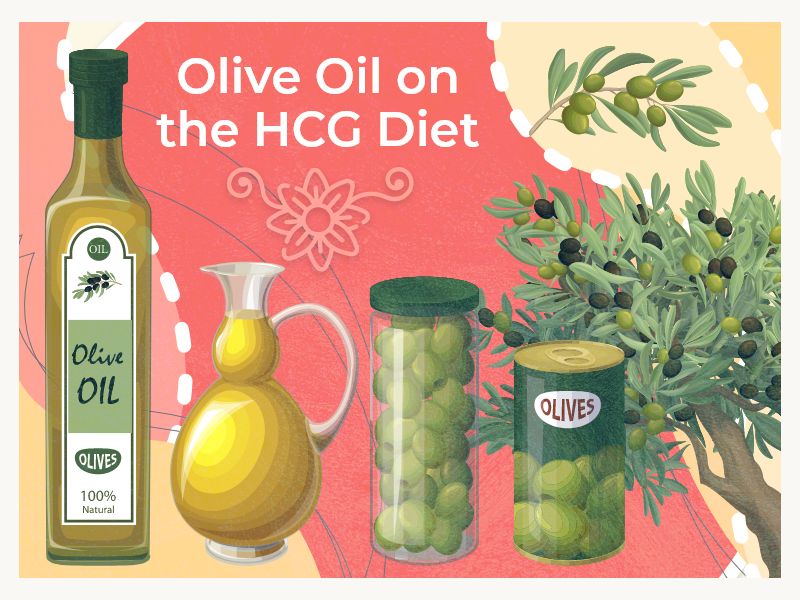
Olive Oil on the HCG Diet

Your body needs healthy fat to function properly and to lose weight. Avocado oil, coconut oil, and olive oil are all healthy fats. Both olive oil and canola oil are hailed as the healthiest cooking oil.

Can I use olive oil on the HCG diet?

No. You can’t use olive oil while on phase two, and yes, you can if you’re in the maintenance phase. The second phase of the HCG Diet requires dieters to restrict their calorie intake to at least 500 calories a day. Along with the calorie restrictions, you are not permitted to sue any form of cooking oil, fat and butter because of their high-calorie content and unhealthy effects on the body. On top of these, the use of oil and fat can interfere with how HCG injection will work in burning down the unwanted fat reserve.

If you are on the maintenance phase, you gradually incorporate healthy foods back into your diet, including fats and oils. When I say healthy fat and oil, I am talking about those low-calorie oils that are enriched with vitamin D like olive oil, coconut oil and sesame oil.

What is olive oil?

Olive oil is the natural oil extracted from the fruits of an olive tree. Oleic acid, the fatty acid in olive oil, makes up 73% of the total oil content. It’s loaded with powerful antioxidants and has a modest amount of vitamin E and K.

Olive oil, the extra virgin one, has anti-inflammatory properties and helps protect your blood cholesterol from oxidation, thus lowering your risk of heart diseases.

The benefits of olive oil

From ancient studies to new research, the benefits of olive oil have been highlighted everywhere. In addition to its numerous health benefits, olive oil can also be an effective tool in weight loss. It’s enriched with monosaturated fatty acids, which assist in weight loss. Other benefits of olive oil include:

  • Reducing inflammation
  • Supporting heart health
  • Lowering the blood pressure
  • Anti-cancer effects
  • Improving the immune function
  • Enhancing the secretion of serotonin
  • Enhancing the digestion process

Olive oil and weight loss

Olive oil has numerous weight loss properties, and the best part is that they are all scientifically proven. It contains monosaturated fat, which is also known as healthy fat. The oleic acid in particular reduces your appetite sensation and makes you feel full for a longer time. Thus, you’ll eat fewer calories and feel less hungry.

The satiating effects of olive oil are achieved by suppressing hunger and cravings, which can lead to less snacking throughout the day. It boosts the body’s metabolism, so even if you don’t work out or exercise, you will still burn more calories. When you limit your calorie consumption and consume only healthy fat, your body will use fats for fuel instead of glucose.

Adding olive oil into your diet is easy and very effective in eliminating excess calories. Along with helping you lose extra fat, you will also keep your body weight at a healthy level.

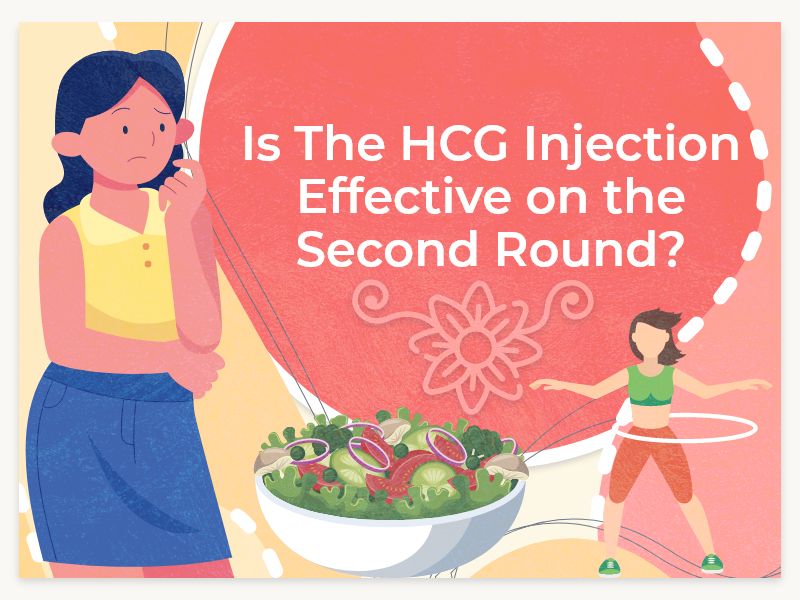
Is The HCG Injection Effective on the Second Round?

The HCG Diet is a very effective, safe and fast weight loss plan that has helped many dieters lose weight. During the diet, you are allowed to do a second, a third or fourth round if you haven’t lost much weight in the first round. The question is, is HCG injection still effective on the second round and the next round to follow?

Is the second round effective?

The answer is YES. The second round of the HCG Diet is safe and effective as the first round. If you haven’t reached your weight loss goal yet on your first try, you can still try it on the second time. As you progress through the second round, you will become more familiar with the protocol. You also have time to prepare and learn more about how to do the diet successfully.

Observing the 6-week break in between rounds

Preparing for your second round requires at least six weeks of break. This is to ensure the HCG isn’t present in your body anymore. The purpose of observing a 6-week break is to prevent your body from developing immunity to the hormone. If you skip this break and continue and continue with the second round prematurely, you will see no further loss. Due to your body developing resistance to the effects of the hormone, you won’t lose any more weight and your weight loss success will begin to decline.

Things to consider when doing the second or succeeding rounds

  • Every round of the HCG diet can be different from the other rounds.

It is not uncommon for dieters to achieve a great result in the first round, even if they do not adhere to the protocol in full. However, they do not achieve the same result in the second round.

  • Sometimes, dieters often take their diet for granted

Despite finding a diet that really works, some do not adhere to the protocol. Some even start their second round without fully committing to it. They will cheat, and they won’t think it matters “that much”. Despite the success of the HCG diet, cheating even a little can have disastrous success, especially when you’re nearing your goal weight.

  • There is a possibility that you won’t lose as much weight the second time around if you don’t really have that much weight to lose.

For instance, a person who needs to lose 35 pounds won’t lose 20 pounds in the first round and another 20 pound in the second round.

Preparing for the second round

  • Plan ahead: Create a meal plan and include the proper food portioning. Do your grocery shopping ahead before you start with the second round. Keep away from your old lifestyle and habits.
  • Make healthy food choices: Continue eating HCG diet allowed foods, vegetables, and protein choices. Aside from making healthy food choices, do not overindulge. Do not eat more than the requires calorie intake during the break.
  • Load properly: On your second-round loading days, load properly, so you can lose as much weight as the first round.

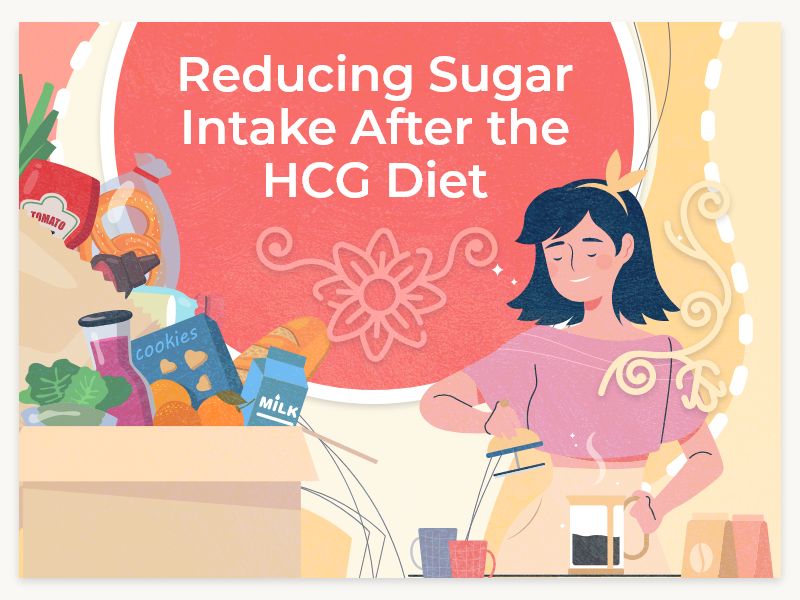
Reducing Sugar Intake After the HCG Diet

Sugar has been one of the biggest health and wellness topics today, especially regarding how to cut back on them. It has been added to foods and drinks here and there, and it never seems to be a big deal. However, as time passed, food manufacturers began to add more and more sugar to just about everything.

Sugar is definitely not allowed when you’re on HCG injection and even while you’re still on the HCG diet. How about after the HCG diet? It’s all up to you. Since you can’t totally eliminate them from your diet, there are ways you can take to cut back on sugar.

Does sugar make you fat?

Too much sugar consumption can have significant negative effects on health. Clearly, it has contributed to the rise of weight gain and obesity. As a major contributor to weight gain, sugar contains calories but few vitamins, minerals, and anything else good for you. Generally, you will store fat if you consume more than what you need. The same goes for sugar. The extra calorie from sugar will cause you to put on excess body fat.

In the U.S., 38% of adults over 19 are obese. What’s more alarming is that 70 percent or more of the adults over the age of 19 are either overweight or obese, suggesting that obesity is common in our country. Based on the statistics alone, it’s clear that effective weight loss management, such as the HCG diet, is necessary.

Sugar is fattening because:

  • It’s high in empty calories.
  • It is less filling.
  • It can significantly raise your blood sugar levels.
  • It can increase your hunger levels making you want to eat more.
  • It increases your risk of chronic health issues.
  • It’s linked to obesity.

Effective ways to cut sugar after the HCG diet

Kicking a sugar habit can be challenging, even for the most determined one, but these tips can help you.

  • Ditch the sugary drink: Sugary drinks like soda, smoothies, and fruit juices contain a high amount of sugar. Adding additional unwanted sugar to your diet can cause your body to gain excess pounds and inches. Additionally, juices and sodas are unlikely to make you feel full for very long. So, you will probably consume more calories than you would normally do. It may sound boring, but substituting sugary drinks for water is your best option.
  • Be mindful of sugar substitutes: Avoiding sugar is something most adults on a diet do. Instead of sugar, they switch to artificial sweeteners. While it can be calorie-free, the sugar substitute is much sweeter than regular sugar. This means when you consume them, your brain will perceive you’re eating a lot of sugar with each bite.

Be mindful of your sugar substitute. The only allowed sweetener on the HCG diet is Stevia. So, why not continue using them even after your diet?

  • Be mindful of your snack choices: Today, most of the popular snacks on the shelves are high in sugar. So, always check the labels for added sugar. Opt for fruits and nuts for snacks.

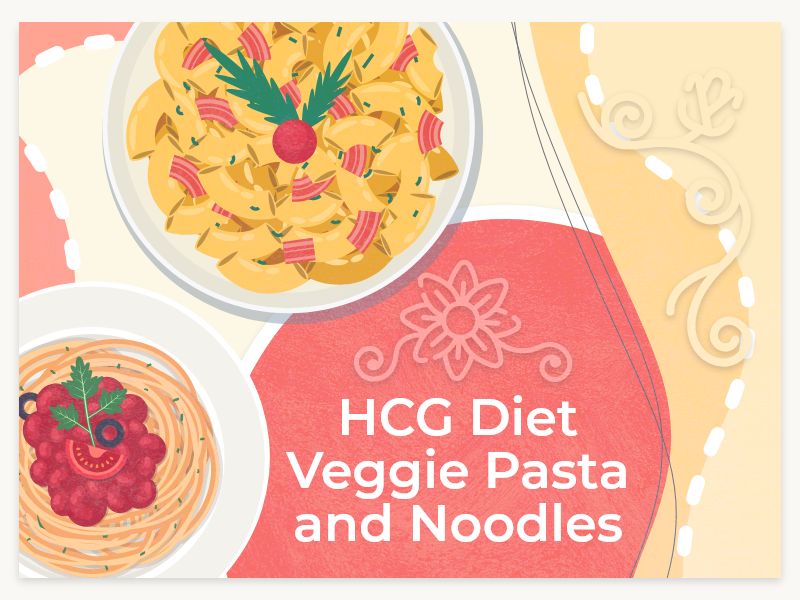
HCG Diet Veggie Pasta and Noodles

Pasta on phase two of the HCG diet is a big NO. You may want to avoid pasta at all costs to avoid weight loss fluctuations, but you don’t have to completely give up on pasta and the scrumptious sauces that come with it. A healthy alternative-Veggie pasta allows you to enjoy pasta and still lose weight!

What is veggie pasta?

Veggie pasta is a healthy alternative to traditional wheat-based pasta. They’re made from 100% vegetables. They are very low in carbs and calories compared with wheat-based pasta. Veggie pasta is gluten-free. They also offer a more complete set of nutrients like vitamins A, C, E, K, and fiber. You can’t find all these nutrients in traditional pasta noodles. So, if you are trying to lose weight but craving for pasta, veggie pasta is the answer.

Low-calorie, low-carb alternative to pasta and noodles

  1. Spiralized vegetables

You can make noodles and pasta from any sort of vegetables, but those that are long, firm, and can easily be cut are the best candidate. Spiralized veggies use a spiralizer, a kitchen device used to cut them into long, thin strips that resemble noodles. Alternatively, you can buy fresh vegetables already spiralized in the vegetable section of many supermarkets. The most popular include turnips, zucchini, cucumber, and beets. You can eat spiralized veggies cold or warm. If you like them warm, boil them for 3 to 5 minutes or until al dente. Do not overcook because this will make them lose their crunch.

  1. Spaghetti squash

Spaghetti squash is a nutritious winter vegetable substitute for pasta. It’s best known for its translucent flesh that separates into long strings resembling angel hair pasta. Spaghetti squash contains folic acid, vitamin A, folate, potassium, and beta-carotene. It’s also an excellent source of fiber. Spaghetti squash is best suited for steaming, baking, and roasting perfect during phase 2 of the HCG Diet. Cooked spaghetti squash can be cooked and sautéed with complementary ingredients to make side dishes, stir-fries, or baked into pies, gratins, and casseroles.

  1. Shirataki Noodles

Shirataki noodles are a popular low-carb substitute for pasta. They’re low in carb and calories but very filling, and you can have them anytime when you’re on HCG injection. They are made from glucomannan fiber derived from the konjac plant. As a soluble fiber, glucomannan absorbs water in the gut and forms a viscous gel. This slows down digestion, making you feel fuller for longer.

Soluble fibers like glucomannan are prebiotics that feed the gut bacteria. The gut bacteria then turn this into short-chain fatty acids of SCFAs that boost the immune system and lowers inflammation.

  1. Seaweed pasta

A novel low-carb pasta alternative is seaweed pasta. It is made up of harvested, rinsed, and dried seaweed. This will give your food a sea-like flavor. Seaweed has fewer calories and carbs than vegetables, but is packed with minerals. It contains high levels of folate, vitamin K, magnesium, iron, and calcium. Depending on the variety, it provides a good dose of iodine as well. Seaweed pasta is similar to fettuccine or spaghetti.

  1. Tofu noodles

Noodles made from tofu are a variation of shirataki noodles. They’re made from glucomannan fiber and tofu. They’re low in carbs and calories, yet rich in proteins.

ADDRESS

26 Pacific Grove. United state (US) California 93950

Call Us (Tolls Free)

877-334-8709

EMAIL US HERE

support@www.hcg-injections.com

We offer everything you need to start, along with ongoing support for HCG Kits users, including tips, advice, and resources for a fitter, slimmer you!

Important Note:

Not everybody will react to in the same way to hCG (Human Chorionic Gonaditropin) – in other words what is true for one person might not work for another- as such do not get discourage if you don’t see the same pronounced results as in others on the same hCG diet – all the information provided here is based on people’s testimony and documentation gather from reputable sources online – the before and after pictures are submitted from our most successful customers and they were offered 20% discount incentive to show the very positive results – not everyone will achieve this – This being said the hCG diet works well , give it a try and see for yourself.

Our Payment Partners :

Add to cart