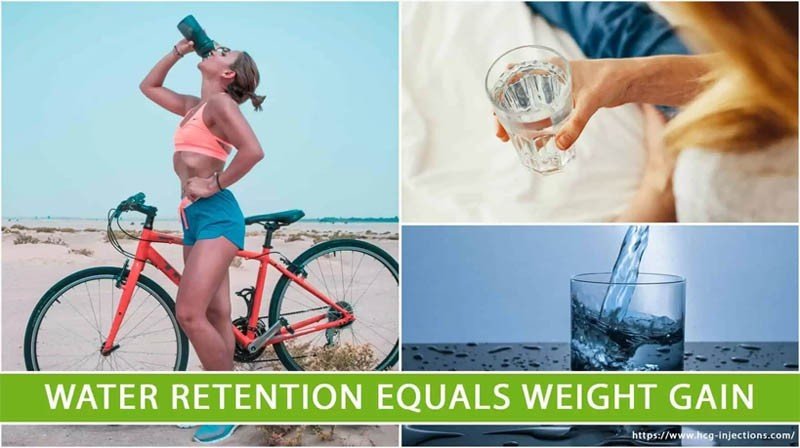
Water Retention Equals Weight Gain

Weight gain due to water retention can be very frustrating. Water retention or edema is fluids that tend to collect in the tissue and outside of the blood vessels. It’s most common in the legs, feet, and ankles but it can affect pretty much any area of the body. There are so many causes of water retention like a problem with one or more of the body’s mechanisms for maintaining fluid levels, lifestyle, and medication, but water retention due to high-salt diet is another thing.

Water Retention during the HCG diet

Water retention during weight loss can sometimes be hard to prevent. It’s a common and specific phenomenon that happens when you are on low-calorie restriction. Many HCG dieters seem to retain a large amount of water, particularly women, which lead to a real weight gain of several pounds over a day. Generally, this water retention has something to do with eating high salt-laden foods.  Too much salt in your diet can cause your body to retain more water, which can show up on the scale as extra pounds. Not only that, but a high-salt diet also appears to be linked to higher body fat that usually accumulates around your waist, hips, and abdomen. Sodium, the main component of salt, is relatively high in calories, which the body dilutes with water if there’s too much.

The relationship between water retention and weight gain

Here’s how sodium causes water retention during the HCG Diet and makes you gain weight.

  • Sodium binds with water and keeps it trapped in the body. It makes you thirsty and your body will hold onto water.
  • Sodium increases your appetite and hunger level and these may lead to overeating and weight gain. 
  • The higher the sodium, the more fluids your body will retain.

More about sodium and weight gain:

  • The normal daily salt intake is 2300 mg or less and that’s equal to 1 teaspoon of table salt.
  • 1/5 tablespoon of salt is the same as 1 gram of salt and contains around 400 mg of sodium.
  • Consuming around 1/5 tablespoon of salt will cause your body to retain at least 4 cups of water.
  • 4 cups of water are equal to 2 pounds of weight gain.
  • Your body retains approximately 1.5 liters of water when you eat too much salt. This continues as long as you continue with your high-salt diet.

Too much sodium can also lead to the following:

  • Increase in the blood pressure as your body holds excess body fluids
  • Creates an added burden to your heart health
  • Increases your risk of having kidney diseases, osteoporosis and cancer

Further causes of water retention

Aside from too much salt intake during the diet, further causes of water retention noticeable even after the diet includes:

  1. Water retention due to menstrual cycle

It’s very common and it’s due to hormonal changes that happen inside your body. Weight gain during the menstrual cycle is temporary so there’s no need to worry. Just avoid eating the wrong foods and drinks as this can cause your body to retain more water.

  • Eating less than 1200 calories a day

If you are on the very low-calorie diet then its fine since you have the HCG hormone to help you lose weight including water weight. However, once you’re off the diet, avoid consuming only 1200 calories or less in a day as this isn’t normal and it’s not good for your body and your health. When you restrict your body from the required calories in a day, your body will break down the stored protein and carbs that holds water. Now when you return to normal eating, your body will start to store carbs and protein again including water weight.

  • Hormones and medications

High levels of insulin, cortisol, estrogen, and progesterone hormone can make your body hold on to water. Medication such as non-steroidal anti-inflammatory drugs, antidepressants, and blood pressure-lowering medications can cause water retention too.

  • Poor blood circulation in the legs

This is one of the most common causes of water retention. For proper blood circulation during the diet, exercise regularly. Ideal exercise includes walking for at least 20 to 30-minutes a day, gentle swimming, jogging, and yoga. Avoid intense cardio exercises such as vigorous weight lifting, cycling, and running.

Ways to lose water weight

Weight gain of about 2 to 3 pounds a day due to water retention is temporary. The weight gain usually corrects itself when you return your sodium intake to a normal level and that’s less than 2300 mg a day. Other ways to help you reduce water weight during the HCG Diet includes:

  1. Replacing salt and salty sauces and dressings with HCG diet approved spices and herbs, low sodium marinades, citrus juices, and many others.
  2. Make it a habit of reading product labels and look for lower sodium or no-salt-added brands.
  3. When eating out, ask servers not to add to much salt on your order. If you can, look online for nutritional information before eating out.
  4. Have a good night’s sleep as sleep can help your body manage its fluid and sodium balance.
  5. Be stress-free. Stress can increase the cortisol and antidiuretic hormones which directly affect your body’s water balance.
  6. Take a magnesium supplement during the diet. Magnesium intake plays a vital role in the hydration level and body water content. It helps reduce water weight and premenstrual symptoms.
  7. Drink more water as water can actually reduce water retention. Sounds interesting, right? Just remember this, over-hydration or dehydration can lead to water retention. So make sure that you drink enough water. Drink when you are thirsty and stop when you feel hydrated.
  8. Drink tea or coffee. The caffeine in teas and coffee has diuretic effects and may help reduce water weight.
  9. Take electrolytes as electrolytes help control cell hydration and water balance.
  10.  Take vitamin B6 supplements. Vitamin B6 has been shown to reduce water retention in women especially during premenstrual syndrome.

Boosting Metabolism For Faster Weight Loss

Reeving up metabolism is the holy grail of weight loss. Obviously, it’s the easiest way to burn fats but how fast your body burns fat depends on several things.  Some may have speedy metabolism but for most dieters, metabolism tends to slow down after age 40. Metabolism is the process by which your body converts the calories from the foods you eat into energy. It has three primary functions:

  • The conversion of fuel into energy to keep you going every day.
  • The breakdown and conversion of fuel into chemicals necessary for building, maintaining, and repair of the body.
  • The breakdown, processing, and excretion of body waste.

Weight loss happens when you have a faster metabolic rate. However, the opposite happens when you try to reduce your calorie intake. This scenario is very common to dieters who practice low-calorie diet without the aid of HCG hormone.

How HCG can boost metabolism

One of the many roles of the HCG hormone is to improve the metabolic functions even when on a very low-calorie diet. It’s a pro-hormone that helps your body makes more hormones including the hormone for muscle building. Without the HCG hormone, you will certainly lose weight. In fact, anybody can lose weight when on low-calorie restrictions but what you don’t know is that most of the weight that you have lost is due to muscle mass. It may look good on the scale but it’s actually bad for your shape and your metabolism. When you lost muscle mass, your metabolism slows down so much that you eventually stop losing weight. Then you quickly regain everything back plus even more.

The HCG hormone allows you to lose weight while protecting the muscle. You lost fat, become leaner, and get back in shape with more muscles. You have a stronger metabolism which can help you maintain your weight loss even after the HCG diet is over.

Cutting back on calories without the help of HCG

Consume too few calories without injecting the HCG hormone can lead to a vicious cycle of diet distress. One thing is for sure though the weight that you have lost will always be temporary. Now, aside from losing your muscle let’s take a look at other changes that will happen to your body when you try cutting back on calories without the HCG hormone.

  • Decreased metabolism

Cutting back on calories can slow down your metabolism by 30%. Your body will go into survival mode and starts breaking down muscle to release the stored glucose. You will feel sluggish and you will develop gastrointestinal problems like indigestions and constipation.

  • Cortisol hormone rises

Your brain runs on glucose and it needs a constant supply to keep everything running smoothly. Without sufficient calories, it won’t work at its peak capacity. There will be an imbalance of hormones particularly the cortisol hormone. This hormone is involved in inflammation and stress. High levels of cortisol hormone can trigger stress. A rise in cortisol can also negatively impact your body composition particularly your liver to produce glucose from muscle breakdown. Plus, high levels of cortisol can cause your stored fats to shift to the middle part of your body. After long calorie restrictions, you will notice that you’re carrying more fats on your tummy and around your waist.

  • You feel hungry most of the time

Eating too few calories will definitely leave you hungry most of the time but in the HCG Diet, the hormone will suppress your hunger as it accelerates your metabolism.

  • Decreased thyroid function

This gland is the master regulator of metabolism. When you reduce your calorie intake, the hormone that your thyroid gland produces drops. As a result, your metabolic rate also drops. HCG, being a pro- hormone, will stimulate your thyroid gland to produce more hormones to help speed up metabolism.

Ways to speed up your metabolism

  1. Take vitamin D supplement: Vitamin D is essential for preserving metabolism-reeving muscle tissue. You can actually nail around 90% of it from the approved-HCG diet foods that you eat but a daily supplement can make a lot of sense.
  2. Skip your diet soda: It’s not allowed on the protocol anyway but by all means, don’t ever think of cheating on soda even if it says zero calories. Diet soda can cause havoc to your having a flat belly goal. The artificial sweetener in it can screw up your body’s normal metabolic response to sugar and surprisingly increase your appetite.
  3. Start your day with protein: Eggs, yogurt, fish, meat, legumes, seeds, and nuts could help reeve your metabolism during the diet. Protein can burn twice as many calories than fats and carbs. They do so by requiring your body to use more energy to digest them.
  4. Spice up your meals: Spicy foods can boost your metabolism because of the natural chemicals they contain.  A chili for example can temporarily increase your metabolism by at least 8% over the normal metabolic rate. Aside from reeving your metabolism up, spicy foods can also increase your feelings of satiety.
  5. Sip some black coffee: Coffee contains caffeine that stimulates the nervous system to send direct signals to the fat cells telling them to break down fat. It increases your metabolic rate which means it increases the number of calories you burn when you rest.
  6. Get enough sleep: Sleep plays a vital role in regulating appetite and metabolism. If you are sleep deprived, your metabolism slows down in an effort of conserving the energy. Your body’s internal system will want to stay alert and look for foods and this raises the cortisol level.
  7. Drink water when you wake up: Before you take a sip of coffee early in the morning, why don’t you have a glass of water to give your metabolism a jolt? During sleep, your metabolism slowed down and it didn’t receive any fluids unless you woke up in the middle of the night to swig some water. So, rehydrate first before sipping on some caffeine.

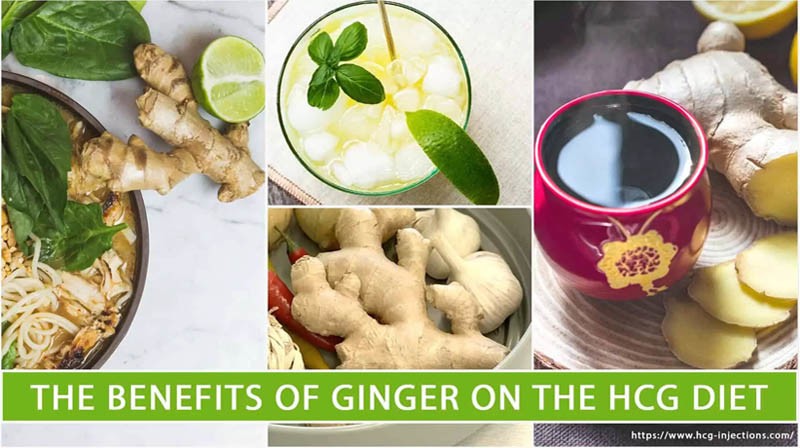
The Benefits of ginger on the HCG Diet

One of the easiest steps that you can take so you lose more weight while on the HCG Diet is to use spices. Spices as you know are not just for flavors but for their many health benefits too including weight loss. There are tons of spices allowed on the HCG Diet which include bay leaf, lemon, Cajun, coriander, garlic mint leaves, and many others to mention. Spices like cilantro, cayenne pepper, cumin, mustard, dandelion, ginger, and turmeric, and chili powder are just some approved spices that are proven to help burn more fats. Among all the spices mentioned, one stands out among the rest-GINGER.

Ginger is among the healthiest spices on the planet. The slightly sweet yet pungent, spicy with citrus undertone and musty flavor will definitely add some zing to your cooking. This spice is derived from the roots of Zingiber Officinale and is closely related to spices like turmeric and cardamom. Ginger has a lengthy history of use from traditional or alternative medicines to cooking, beverages, and cosmetics.

How can ginger help you lose more weight?

Ginger is most commonly known for its anti-inflammatory features but it’s no secret that ginger aids in weight loss. As a supplement or ingredient in your foods and drinks, ginger may help promote further weight loss on the HCG Diet.

  • Ginger contains two compounds, gingerols, and shogaols, proven to help stimulate metabolic activities in your body.
  • It’s a natural appetite suppressant and a very filling spice. Consuming a bit more of it will make you less likely to suffer from hunger pangs even when on calorie restrictions. This is what makes it helpful during the diet.
  • The anti-obesity effect of ginger helps speeds up digestions at the same time stabilize your blood sugar levels-all are vital for effective weight loss.

Other benefits of ginger

  1. Ginger soothes tired muscles

The anti-inflammatory properties of ginger help soothe tired muscles from exercise, cold weather, and exertion. It also reduced muscle pain and soreness. To help soothe tired muscles, mix two tablespoons of ground ginger with 1 cup Epsom salt, and 1 cup baking soda in a large bowl. Pour the mixture into hot running water and soak tired muscles for 15 minutes.

  • Reduce pain and stiffness due to osteoarthritis

When applied topically, ginger helps reduce pain and stiffness from osteoarthritis. It contains an anti-inflammatory compound that functions in the same way as COX-2 inhibitor drugs. To use ginger for arthritis, add a few tablespoons of ginger into your diet. You can grate ginger over your salad or make a ginger tea. Ginger oil can be used topically over the affected area. When you apply ginger oil to the skin, dilute it first with a carrier oil.

  • Lower cholesterol levels

A daily dose of ginger may help battle bad cholesterol levels in the body. High levels of LDL are linked with an increased risk of heart problems.

  • Ginger can treat chronic indigestion

Ginger has been shown to speed up emptying of the stomach among those with indigestion and stomach related problems. At the same time it relief intestinal tract constriction thereby reducing bloating and gas flatulence.

  • Ginger combats motion sickness

It’s highly effective against nausea without any loopy side effects. It’s not only effective against motion sickness it may be most effective when it comes to nausea during pregnancy.

  • Lowers blood sugar level

Ginger also plays a positive role in blood sugar management for people with type 2 diabetes. Using at least 4 grams of ginger a day can help lower blood sugar and regulate insulin production. All of which are vital for effective weight loss. When using in moderation, ginger can be an effective addition to your diabetes treatment.

  • Reduce menstrual pain

Ginger has long been known for its anti-inflammatory effects like other warming spices such as cayenne pepper and cumin. Recent studies have shown that ginger is specifically effective in naturally treating menstrual pain. The compound in the ginger prevents the production of prostaglandin, a chemical that triggers muscle contraction, thus reducing menstrual cramps and pain.

  • Fights infections

The bioactive substance in ginger known as gingerols can help lower the risk of infections. In fact, this spice can actually inhibit many types of bacterial growth including the RSV virus that causes respiratory infections.

Approved HCG Diet ginger recipes

P2 Ginger Dressing

What you need:

  • 4 tablespoons of fresh grated ginger
  • 1 cup vinegar
  • 1 teaspoon of ground black pepper
  • 8 tablespoons beef broth
  • 8 tablespoons Braggs Aminos
  • Stevia

What to do:

Combine all the ingredients in a large bowl and whisk together.

Citrus-Ginger Dressing

What you need:

  • 1 fresh ginger
  • 1 teaspoon of apple cider vinegar
  • 1 teaspoon of ground black pepper
  • 1 tablespoon lemon-lime
  • 2 tablespoons orange juice
  • 1 tablespoon Braggs Aminos
  • 1 Stevia
  • Salt

What to do:

Simply combine all the ingredients in a large bowl and mix.

Stir Fry Chicken with Ginger

What you need:

  • 7 ounces of boneless chicken breast
  • 2 tablespoons of fresh grated ginger
  • 5 cups shredded cabbage
  • 2 teaspoons minced garlic
  • ½ teaspoon Chinese five spice
  • 2 stalks green onion
  • 1 teaspoon hot sauce
  • 1 teaspoon apple cider vinegar
  • 1 teaspoon of ground black pepper
  • 4 tablespoons Braggs Aminos
  • 1 Stevia
  • Salt

What to do:

  1. Cut chicken breast into bite-size.
  2. In a small bowl, stir apple cider vinegar with Bragg’s Aminos and stevia then set aside.
  3. Heat the pan over medium heat then add chicken and sear for 1 minute on both sides. Add ginger and garlic until fragrant. Add onion, cabbage, hot sauce, five-spice, and sauce and cook for 2 to 3 minutes or until vegetables are cooked.
  4. Serve hot.

Carrot, Ginger, and Turmeric smoothie

Ingredients

  • ½ cup of carrot juice
  • 1 large ripe banana
  • ½ tablespoon ginger
  • ¼ teaspoon turmeric
  • 1 tablespoon lemon juice
  • Unsweetened almond milk
  • Stevia

What to do:

  1. Mix all the ingredients in a blender and blend on high until smooth and creamy.

Not Losing Weight on The HCG Diet: Why?

Losing weight might sound like an impossible task. You work out, you watch your calories, and still, you seem not to lose weight. You often ask, “Why can’t I lose weight?” There can be a lot of reasons for that question.

Reasons why you’re not losing weight

Health conditions: Before you take a plunge into any kind of diet, you need to rule out first your medical conditions. Certain medical conditions can make losing weight much difficult.

  • Hyperthyroidism/ hypothyroidism can both affect your metabolism, making you feel hungrier more often and causing weight gain.
  • Polycystic ovary syndrome (PCOS) is linked with hormonal abnormalities. PCOS can make it difficult for the body to use insulin causing insulin build-up in the bloodstream. High levels of insulin increase androgen hormone leading to weight gain typically in the abdomen.

If you’re sure that you are not affected by any one of the conditions mention, then there could only be one reason why you can’t lose weight. You can’t lose weight because you are HUNGRY.

Hunger is the source of all failed weight loss attempts. When a diet fails it’s because you have cheated. When you fail, most of the time you will regain 95% of all weight that you have lost. Some even gained back more.

Why do you feel hungry?

When you get that rumbling feeling, you know it’s time to grab a bite to eat. What makes you hungry? What exactly causes the feeling? Hunger tells your body that you need to eat to keep your body fueled. The feeling you get from being hungry happens because of these two chemicals being released in your body.

  • Ghrelin: It’s a hormone produced by your body that signals your brain to eat. High levels of ghrelin make you feel hungry. When you are full, the ghrelin hormone drops. 
  • Leptin: This hormone is pretty much the opposite of ghrelin. Too much leptin means fewer hunger feelings. Low levels of leptin can leave you feeling hungry and craving for everything and anything.

When on low-calorie restrictions, your ghrelin hormone increases while your leptin hormone decreases. This makes you feel hungry and can lead you to cheat. However, this is not the case with the HCG Diet.

Hungry on the HCG Diet

The HCG Diet, again, is scientifically designed to help you lose weight faster without making you feel hungry during the diet. HCG injections will tap your brain’s hypothalamus so it can send a chemical signals unto the adipose tissues where fat reserved are kept to be used as an alternative source of energy. This helps keep you going even if you are on a very low calorie.

Hunger and craving are surprisingly not an issue on the HCG Diet. When you follow the protocol and implement it to the best of your ability you won’t feel hungry. The HCG Diet is designed to help you lose weight safely and the fastest amount of weight possible. You will find that you can half a pound to two pounds each day. Occasionally, there are times when you feel hungry even though you have followed the protocol. Here’s what you can do:

  1. Increase or decrease the amount of HCG:

The minimum daily hcg injections dosage to inject is 125IU while the maximum dose is 200IU. If you are hungry on the 125IU, you can increase your dose to 150IU or 175IU, whichever you are comfortable with. If you have started using 150IU and you’re hungry, either lower your dose or increase. Men can have higher doses like 200IU due to how much they eat while menopausal women’s dose can drop as low as 75IU

  • Make sure to drink plenty of water

Use water to suppress your hunger. Drinking tons of it is very helpful for controlling your hunger.  When you drink water, your stomach stays fuller. The recommended amount is half a gallon to one gallon a day. Teas and coffee work well as an appetite suppressant as the caffeine helps control your appetite naturally.

  • Spread your foods throughout the day

Some dieters need to eat more frequently. You can break your two meals into 4 divided small meals a day. You can also break up your fruit intake. Instead of eating during your meal, you can eat the fruit options during snack time. It’s definitely worth a shot to experiment with different methods.

  • You eat your vegetables

If you have tried everything but you are still hungry, increase your veggie servings a little bit. You can eat green veggies in an unlimited number but try limiting the tomatoes and onion as they can cause a stall to some dieters. Soups and salads are great options. Greens like spinach, lettuce, and chard are very low in calories.

  • Extra bite of protein

Aside from veggie options, you can also have an extra bite of protein. Protein has a satiating quality that leaves you more satisfied and full for a longer time than other foods. 


Body Fats on the HCG Diet

Fat is basically stored energy. It acts like a battery, ready to provide energy for you when you most need it. Your body converts fats to usable energy for your muscle and other tissue through a series of complex metabolic processes. As a result, your fat will shrink.

When you consume fewer calories more than you burn up, and you exercise your body will reduce some of the adipose tissue. As a result, your fat cells shrink and so is your waistline line. The opposite happens when you consume more calories than your expend. All the excess calories are stores throughout your body as fat. These fats are stored in the specialized fat cells called adipose tissue either by creating more of them or by enlarging the fat cells. As a result, you gain weight.

Fat or adipose tissue is found in several places in your body. Fat concentration in your body depends on your gender. Women generally tend to carry fat in the hips, waist, breast, and buttock creating a pear shape body. Men, on the other hand, carry fat in the abdomen, chest, and buttock.

How the HCG Injections burn abnormal body fats

The HCG Diet is scientifically proven to be an effective weight loss program. It exclusively targets adipose tissue without affecting the muscle. This diet has been there for over 6 decades with several studies and claims that suggest weight loss that ranges from half a pound to two pounds a day.

The HCG Diet utilizes Human Chorionic Gonadotropin hormone to tap the brain’s hypothalamus to release excess fat stores in combination with calorie restrictions. Hypothalamus is a part of the brain that controls your appetite. When you have a diet high in starch and sugar, your hypothalamus will drive you to eat more of those foods. HCG affects the hypothalamus by stimulating the body to release unwanted fat reserve. The stubborn abnormal is then released into the bloodstream from where it is utilized to provide energy.

The hormone works best in conjunction with the low-calorie diet, 500 calories a day, for a period of 23-days or 46-days depending on how much weight you want to lose. The trick is not actually in the calorie count but in the strict fat, sugar, and carbs reduction from the diet. Your body can utilize fat storage only when you reduce your fat intake. Without HCG injections and ONLY the diet, your body will burn muscle mass instead of fat storage. So, don’t ever think of skipping the HCG injection. The entire diet is divided into 4 phases:

  • In phase 1, your goal is to load on high-fat high-calorie foods to trigger the HCG mechanism in the next phase.
  • The second phase is the weight loss phase where you consume only 500 calories a day. 
  • The next phases are stabilization and maintenance phases. On the stabilization phase, you stop having your injection but you continue with the calorie restriction. In the maintenance phase, you slowly introduce foods back into your diet.

The HCG Diet has careful food selections and the 500 calorie diet provides the basic nutrients and minerals to supplement the calories the hormone provides. No variations to the diet are allowed and any foods not on the list are forbidden. Altering the diet in any way can greatly interfere with weight loss. The hormone is proven to be safe and has been used by thousands of dieters without any major side effects. HCG is permitted to treat infertility in women and hormonal conditions in men but doctors are permitted to prescribe HCG off label for weight loss.

Fat conversion into energy

There is a clear calorie deficit on the HCG Diet as you only consume 500 calories a day. No more, no less. However, despite the calorie deficit, you do not run out of energy because there is another source of energy in your body to carry out your daily chores and also to meet your metabolism needs.  The HCG stimulates your brain to release stored fats into the bloodstream to get converted into energy. Even if you don’t feed on the right amount of foods you feel energetic due to the internal fat-release mechanism of your body.

Some facts about the shrinking process

HCG can stimulate the brain to release stored fats from the adipose tissue but the shrinking process isn’t that 100% efficient. Fat has to undergo a series of chemical reactions before it is finally converted into energy but here’s the thing, not all fats are converted into energy. The process of using a fat store also creates byproducts like water and carbon dioxide which exits in the body through sweat and urine. Most of the byproducts of fat leave the body in the form of carbon dioxide. This is something to think about when you take your 20 minutes’ walk a day during the diet.


ADDRESS

26 Pacific Grove. United state (US) California 93950

Call Us (Tolls Free)

877-334-8709

EMAIL US HERE

support@www.hcg-injections.com

We offer everything you need to start, along with ongoing support for HCG Kits users, including tips, advice, and resources for a fitter, slimmer you!

Important Note:

Not everybody will react to in the same way to hCG (Human Chorionic Gonaditropin) – in other words what is true for one person might not work for another- as such do not get discourage if you don’t see the same pronounced results as in others on the same hCG diet – all the information provided here is based on people’s testimony and documentation gather from reputable sources online – the before and after pictures are submitted from our most successful customers and they were offered 20% discount incentive to show the very positive results – not everyone will achieve this – This being said the hCG diet works well , give it a try and see for yourself.

Our Payment Partners :

Add to cart